Tuesday, 31 March 2009

Living walls and Green roofs pave way for Biodiversity

A roof garden on the top of of a building in Canary Wharf, London. Felicity Carus guardian.co.uk, Monday 30 March 2009 18.26 BST Photograph: Dan Chung

Living walls and green roofs pave way for biodiversity in new buildingOtters could return to urban rivers, bats could roost under bridges, swifts could flock to office blocks and peregrine falcons soar above cathedrals under recommendations from the UK Green Building Council

What do the Westfield shopping centre, Canary Wharf and a Victorian museum have in common? They are all at the vanguard of a move to encourage biodiversity in buildings that could take on an unprecedented scale if guidelines published today are adopted.

Under recommendations from the UK Green Building Council (UKGBC) for developers, planners and policy-makers, Otters could return to urban rivers, bats could roost under bridges, swifts could flock to office blocks and peregrine falcons soar above cathedrals. Existing examples of encouraging biodiversity in buildings include the Westfield shopping centre in west London and its "living wall" planted with wildflowers, Canary Wharf's assortment of biodiversity initiatives, and the south London Horniman Museum's green roof, one of the country's first.

Carol Williams, the chairwoman of the UKGBC task group of biodiversity and construction industry experts, said the government's target for all new homes to be zero carbon by 2016 is changing attitudes in the construction industry. "The construction and property sector has been pilloried in the past for its negative impact on green space, wildlife and habitat – but the industry can actually have a positive influence on ecological value. If we don't make provision for wildlife now, then we might not be able to attract it retrospectively quite so easily," she said.

The UKGBC task group - which included Natural England, the Association of Local Government Ecologists, Bovis Lend Lease, the Canary Wharf Group, Grimshaw Architects - recommended 10 ways to encourage and enhance biodiversity in the built environment.

Just some of the design features which would encourage biodiversity in cities are specially made nesting bricks built into cavity walls for birds such as swifts and starlings, or ledges that mimic cliff faces for peregrine falcons which are attracted to tall buildings. Cathedrals, office blocks in Canary Wharf and Battersea power station in south London are all known to have housed breeding birds of prey.

Green corridors will allow other mammals to "commute", said Williams, and careful lighting and roosting boxes under bridges will allow Daubenton's and pipistrelle bats to inhabit areas which are ususally too bright for them.

But according to Dave Wakelin of sustainability consultants Hilson Moran, "green roofs" have the biggest impact on biodiversity in cities, because patches of roofspace that mimic grassland or shale environments can create their own ecosystem. Black redstarts, he says, have been attracted back to Canary Wharf by the shrill carder bee, a ground nesting bee that burrows into the sediments in the shale in the roof garden at 20 Cabot Tower.

In the City of London, CCTV is trained on peregrine falcons nesting in an office block so that staff can watch the progess of a breeding pair, as chicks hatch. Wakelin said this is just one initiative to get office workers more interested in the "priority" species in their city.

"We see buildings as extensions of green space. They are like fingers of greenery spreading out between buildings and act as green stepping stones between bigger areas of green space mean that you haven't got so many barren spaces left in cities."

Paul King, chief executive of the UKGBC, said: "If done well, new developments can actually create habitats in which wild species thrive, and which we can all enjoy. Green roofs, living walls, and good old-fashioned parks and green spaces in our built environment can make us all feel happier and healthier, and give something back to nature."

Environment minister Huw Irranca-Davies welcomed the report. He said: "Our wildlife brings opportunities as well as challenges, and this report demonstrates how the construction industry can show leadership in recognising how protecting and enhancing the UK's wildlife can bring economic as well as environmental benefits."
Monday, 30 March 2009

Contents of http://fbc.binghamton.edu/commentr.htm

The following commentary has been sent to you by tan.
-*-*-*-*-*-*-*-*-*-*-*-*-*-*-*-*-*-*-*-*-*-*-*-*-*-
Comments:
Pondering Uncle Sam
-*-*-*-*-*-*-*-*-*-*-*-*-*-*-*-*-*-*-*-*-*-*-*-*-*-


List of previous commentaries in English and translations in other languages


Mar. 15, 2009, Commentary No. 253


"Civil War in the United States?"


We are getting accustomed to all sorts of breakdowns of taboos. The world press is full of discussion about whether it would be a good idea to "nationalize" banks. None other than
Alan Greenspan, disciple of the superlibertarian prophet of pure market capitalism, Ayn Rand, has recently said that we have to nationalize banks once every hundred years, and this
may be that moment. Conservative Republican Senator Lindsay Graham agreed with him. Left Keynesian Alan Blinder discussed the pros and cons of this idea. And while he thinks
the cons are a bit bigger than the pros, he was willing to spend public intellectual energy writing about this in the New York Times.


Well, after hearing nationalization proposals by arch-conservative notables, we are now hearing serious discussions about the possibilities of civil war in the United States.
Zbigniew Brzezinski, apostle of anti-Communist ideology and President Carter's National Security Advisor, appeared on a morning television talk show on February 17, and was
asked to discuss his previous mention of the possibility of class conflict in the United States in the wake of the worldwide economic collapse.


Brzezinski said he was worried about it because of the prospect of "millions and millions of unemployed people facing dire straits," people who have become aware "of this
extraordinary wealth that was transferred to a few individuals without historical precedent in America."


He reminded the listeners that, when there was a massive banking crisis in 1907, the great financier, J.P. Morgan, invited a group of wealthy financiers to his home, locked them in
his library, and wouldn't let them out until they all kicked in money for a fund to stabilize the banks. Brzezinski said: "Where is the monied class today? Why aren't they doing
something: the people who made billions?"


In the absence of their doing something on a voluntary basis, Brzezinski said, "there's going to be growing conflict between the classes and if people are unemployed and really
hurting, hell, there could even be riots!"


Almost simultaneously, a European agency called LEAP/Europe that issues monthly confidential Global Europe Anticipation Bulletins for its clients - politicians, public servants,
businessmen, and investors - devoted its February issue to global geopolitical dislocation. The report did not paint a pretty picture. It discussed the possibility of civil war in Europe,
in the United States, and Japan. It foresaw a "generalized stampede" that will lead to clashes, semi-civil wars.


The experts have some advice: "If your country or region is a zone in which there is a massive availability of guns, the best thing you can do...is to leave the region, if that's
possible." The only one of these countries which meets the description of massively available guns is the United States. The head of LEAP/Europe, Franck Biancheri, noted that
"there are 200 million guns in circulation in the United States, and social violence is already manifest via gangs." The experts who wrote the report asserted that there is already an
ongoing emigration of Americans


to Europe, because that is "where physical danger will remain marginal."


If Brzezinski hopes for the emergence of another J.P. Morgan in the United States to force sense upon the "monied" class, the LEAP/Europe report sees a "last chance" in the April 2
London meeting of the G20, provided the participants come forward with a "convincing and audacious" plan.


These analyses are not coming from left intellectuals or radical social movements. They are the openly expressed fears of serious analysts who are part of the existing Establishment
in the United States and Europe. Verbal taboos are broken only when such people are truly fearful. The point of breaking the taboos is to try to bring about major rapid action - the
equivalent of J.P. Morgan locking the financiers in his home in 1907.


It was easier in 1907.


by Immanuel Wallerstein


[Copyright by Immanuel Wallerstein, distributed by Agence Global. For rights and permissions, including translations and posting to non-commercial sites, and contact:
rights@agenceglobal.com, 1.336.686.9002 or 1.336.286.6606. Permission is granted to download, forward electronically, or e-mail to others, provided the essay remains intact and
the copyright note is displayed. To contact author, write: immanuel.wallerstein@yale.edu.

These commentaries, published twice monthly, are intended to be reflections on the contemporary world scene, as seen from the perspective not of the immediate headlines but of
the long term.]

Friday, 27 March 2009

Beyond Hope

I thought you would be interested in the following article from Orion Magazine:
Beyond Hope
Hope is the antithesis of action. Hope expects that someone else will do the hard work of change, that things will just...get better.
For more info:
http://www.orionmagazine.org/index.php/articles/article/170/

Thursday, 26 March 2009

A Friend Sent This from the David Suzuki Foundation

Your Friend's Comments:
Forest and GW linkage Click Here to View:
http://www.davidsuzuki.org/about_us/Dr_David_Suzuki/Article_Archives/weekly03130901.asp

Perlawanan Petani Muda Desa Sanggalangit

Yth. Bapak/Ibu tanikota,

telah mengirimkan sebuah link berita dari http://cetak.kompas.com :

Judul : Perlawanan Petani Muda Desa Sanggalangit

 Oleh BENNY DWI KOESTANTO dan KORNELIS KEWA AMAKandang sapi komunal
kelompok Niki Sato di Desa Sanggalangit adalah sebuah tempat pertemuan.
"Asrama" sapi di kawasan kering, 40 kilometer utara Pelabuhan Gilimanuk,
Bali, itu sekaligus menjadi tumpuan harapan.Hari menjelang senja ketika para
petani peternak mulai memasukkan sapi-sapi bali mereka ke kandang setelah
dilepas di tegalan, Minggu (22/3) ...

Link :
http://cetak.kompas.com/read/xml/2009/03/25/05053581/perlawanan.petani.muda.desa.sanggalangit

dengan pesan :
Sarjana pulang kampung

Monday, 23 March 2009

Menanam Mudah, Merawat Susah Bang!

...intinya siapa yang akan merawat bibit pohon-pohon tersebut agar mereka dapat tumbuh kuat dan sehat sehingga bermanfaat mengurangi 'pemanasan global'. Semoga orangnya ada jadi tak asal bunyi ato cuman 'rhetorikal saja. Di Afrika program yg sama tinggi persentasi gagal [untung ada orang sekaliber Wangari Maathai yg mampu merawat. Semoga kita juga punyalah...

Menhut: Banyak Tanam Pohon Pemanasan Global Berkurang

Medan, (Analisa)
Untuk mengurangi efek pemanasan global dan perubahan iklim, dapat dilakukan dengan memperbanyak pohon dan tanaman-tanaman. Karena itu, seluruh lapisan masyarakat diharapkan secara bersama-sama tetap mempertahankan keutuhan ekosistem hutan dan melakukan penanaman pohon secara besar-besaran.Demikian disampaikan Menteri Kehutanan RI MS Kaban dalam sambutannya yang dibacakan Gubsu H Syamsul Arifin SE dalam acara peringatan Hari Bakti Rimbawan ke 26 di halaman Kantor Gubsu Medan, Jumat (20/3).
“Kelestarian sumberdaya hutan dewasa ini sudah menjadi isu global. Umat manusia di seluruh dunia meyakini, bahwa hutan tidak hanya memiliki fungsi sosial ekonomi dan sosial budaya, tetapi juga fungsi ekologis yang peranannya sangat vital bagi sistem penyanggah kehidupan,” ujarnya.
Disebutkan, berbagai program rehabilitasi hutan dan lahan, serta berbagai kegiatan telah dilakukan pemerintah untuk mendorong upaya pelestarian hutan. Termasuk gerakan nasional rehabilitasi hutan dan lahan, kecil menanam dewasa memanen, serta gerakan penanaman serentak 100 juta pohon.
Gerakan Moral
Tidak hanya kegiatan atau aksi penaman pohon semata, namun yang lebih penting, sebutnya, adalah kegiatan tersebut mengandung gerakan moral yang mengajak semua pihak untuk mengubah pola pikir (mind set) dari kebiasaa menebang pohon menjadi cinta menanam pohon dan memelihara pohon.
“Jika penduduk Indonesia, saat ini berjumlah 230 juta orang, dan setiap penduduk Indonesia menanam satu batang pohon saja, one man one tree, maka setiap tahunnya bangsa Indonesia telah menanam 230 juta batang pohon,” katanya.
Ini juga merupakan sumbangsih bangsa Indonesia dalam memperbaiki kualitas lingkungan, serta upaya menanggulangi pemanasan global, yang dipersembahkan untuk manusia di seluruh dunia. Karena itu juga, Presiden RI Susilo Bambang Yudhoyono mengamanatkan target penanaman pohon tahun 2009 ini sebanyak 230 juta pohon dalam gerakan “one man one tree”.
“Untuk itu, saya mengajak seluruh rimbawan dimanapun berada, mulai sekarang untuk berperak aktif menjadi pelopor bagi keluarga dan masyarakat dalam menyukseskan gerakan menanam pohon, one man one tree,” katanya.
Turut hadir dalam acara tersebut, Kapoldasu Brigjen Pol Badrodin Haiti, Pangkosek Hanudnas III, Danlantamal Belawan, Sekdaporpsu DR RE Naing golan MM, Kadis Kehutanan Provsu Ir James Budiman Siringoringo, para pejabat dan ratusan rimbawan.
Acara tersebut juga dirangkai dengan penyerahan secara simbolis bibit tanaman oleh Gubsu kepada perwakilan rimbawan, PNS, Polri, TNI dan Polhut, serta penanam pohon bersama yang dilakukan oleh Gubsu, Kapolda, Danlantamal Belawan dan Pangkosek Hanudnas III serta Sekdaprovsu di halaman Kantor Gubernur Sumut di Medan.(ir)

Sunday, 22 March 2009

Eco-Architecture NUS

Hello,
Your friend, , send you an interesting news from alambina.net
Here is the news summary:
Eco-Architecture - A New (Old) Vocabulary. Notes from Prof. Steffen Lehmann Public Lecture at National University of Singapore
By: Meutia Chaerani
2006-05-08 22:04:46
Speaking at an NUS public lecture, Professor Steffen Lehmann has presented two ways of setting up the framework for eco-architecture: to learn from the precedents or the vernacular, and to use new technologies. Here's an excerpt.
The complete news can be accessed in this address: http://alambina.net/?phpzap=news&part=detail&id_news=26&lang=en

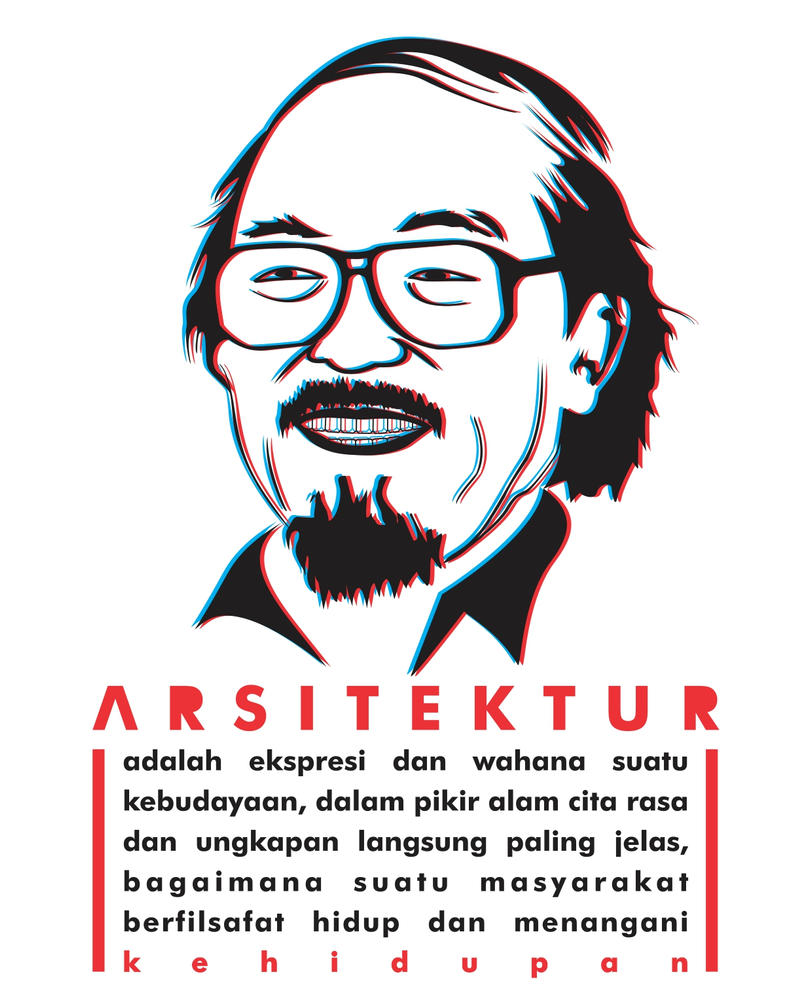
Pedagogi Humanisme Mangunwijaya

Judul : Pedagogi Humanisme Mangunwijaya
A FERRY T INDRATNO

Konsep Pasca-Indonesia dan Pasca- Einstein merupakan konsep dasar humanisme Mangunwijaya yang dilandasi keprihatinannya. Kitamasih suka berpikir dehumanis dalam bentuk pemikiran yang sempit, terkotak-kotak, bercita rasa dangkal, munafik, tidak fair, tidak jujur, serakah, manipulatif, tidak cerdas, dan tidak dewasa.

Dalam bidang pendidikan, situasi tersebut mengakibatkan generasi muda [...]

Link :
http://cetak.kompas.com/read/xml/2009/03/20/05242168/pedagogi.humanisme.mangunwijaya


Wednesday, 18 March 2009

A short note on the current economic crisis

The current global economic crisis presents a golden opportunity for a paradigm shift--from an atomistic, individualistic consumption driven industrial global economy to Schumacherian economy ie. 'economic as if people matters' or more recently David Korten's 'Living-economy'. At the heart this is a crisis of character first and economic second.
PS: remember also 'ex injuria jus non oritur' (right cannot originate from wrong).

Tuesday, 17 March 2009

The Boxed Life

My life [like many others] is literally lived inside a 'box' hence the 'boxed life' - upon waking up I found myself inside a 'sleeping-box' [the bed room], then as Nature calls I pass through the corridor into yet another another box, the 'eating-box' [the dining room] or if you prefer the biologically correct term the 'ingestion box' after a quick warm drink, yogurt or fruits I proceed into the rather small but vital 'deposit box' for egestion reading my book or type my blog etc...and feeling relief afterwards. Then if you are lucky to own your own tranportation mode like a the 'box with wheels'- called it a car if like, you will be travelling through a network of mostly square 'boxy' grids along with others in their similar 'boxes with wheels'. And finally [if you still got a job in one of the CBDs boxes ie building of the world] you and your fellow travellers will get into yet another box to be pulled up or down before reaching your ultimate destination inside boxes that go up and down [yes, you guess it right it's the lift!] finally you will arrive in the many 'open-top' working desk boxes called 'cubicles' your semi-private 'sitting-box' on top of your boxy square desk where your eyes will be trained to see short distance for the next 8 hours or so while watching the flickering computer screen until about late afternoon [more for those dedicated :)].

This pattern of behaviour is repeated again in as you journey to your isolated 'boxes of residence' or your 'a-part-ment' - this process is repeated and reproduced millions if not hundreds of million times everywhere in the rich North and its metropolis satellites in the South.

I'm certain that something can be improved, changed or discarded in this repetitive process but before that try consulting your psychiatrist or psychologist for advise, ask him or her if this pattern of behaviour is detrimental to your wellbeing so that you get some assurance that you are not wasting your precious time and money. But if you ask me, my answer is straight forward, this type of behaviour is repetitive therefore dulling the mind, limiting your options and worst of all, if practiced long enough-will become a habit that destroys your soul, not to mentioned the horrendous but unseen and unsustainable ecological costs[...aaarrrgh!!!] To me 'The boxed' life is an accomplice to the large-scale 'industrialisation' of Human and Nature - turning the former into robots and the latter into convertible resources - literally removing essential life from the biosphere.

Monday, 16 March 2009

Copenhagen CC Summit 2009 - Who will bail out the planet?

In terms of commitments to green investment, Britain now lags well behind the US. There is a commonly held view in Westminster that, while voters profess to care about the environment, those concerns are trumped by fears over the economy, crime and immigration. That is true up to a point. But as the 2006 Stern report identified, the disastrous consequences of inaction on climate change vastly outweigh the cost of action. Any long-term policy for the economy, or for that matter on crime and migration, will have to take notice of the environment too.
But policy-making for the long term has fallen out of fashion. In fact, many of us fell out of the habit of long-term thinking during the heady consumer boom. That must now change.
The financial crisis has shattered the free-market orthodoxy that drove policy for a generation. We can now develop a new political philosophy, one that has the principles of environmental sustainability at its core - that presents the threat of climate change not as inevitable apocalypse, but as an opportunity.

There is an antidote to climate defeatism: it is the knowledge that the actions we take now to lead a greener life could boost employment and develop an economy less dependent on wasteful financial services; improve national security by making us less dependent on fossil fuels; and deliver us a better, healthier, happier lifestyle. It so happens they will also preserve the planet for future generations.

Stern Warning on GW

Scientists at the Copenhagen meeting will publish its full findings in June, but last night they issued their conclusions as a strongly worded statement"

"The climate system is already moving beyond the patterns of natural variability within which our society and economy have developed and thrived. These parameters include global mean surface temperature, sea-level rise, ocean and ice sheet dynamics, ocean acidification, and extreme climatic events. There is a significant risk that many of the trends will accelerate, leading to an increasing risk of abrupt or irreversible climatic shifts."

The summary adds: "There is no excuse for inaction. We already have many tools and approaches - economic, technological, behavioural, management - to deal effectively with the climate change challenge. But they must be vigorously and widely implemented."
In the conference centre that will also host the December UN negotiations, experts at this week's meeting presented a string of new studies that suggested global warming could strike harder and sooner than expected.

Dr. Stephan Harding on Intelligent Growth [Non-industrial Intelligence]

Intelligent Growth
By Stephan Harding
Featured in Resurgence, March 2008
An economist speaking on Radio 4 in the UK recently insisted that a third runway at Heathrow Airport was a good thing, otherwise we would “risk our competitive advantage, which we are already in danger of losing to France”. There was no discussion of the environmental costs of such growth, either to local residents or to the climate. How much longer can this suicidal thinking possibly hold sway, and how can we persuade economists and governments to see ‘growth’ in another light?

IT HAS ALWAYS amazed me how our culture seems to have immense difficulty in accepting one very simple fact: that the Earth is a finite sphere which cannot suffer our depredations without limit. Or, to put it differently, that our planet simply cannot sustain our obsession with converting more and more of her ‘resources’ into accumulating legions of shiny, mostly useless, over-packaged products. One instance of this lack of comprehension haunts me still: a chance meeting in a railway carriage with the bursar of one of the Oxford colleges some thirty years ago when I was a young undergraduate at Durham University. We chatted on amiably enough until, discovering that he was an economist, I casually mentioned the notion of limits to growth. I shall never forget the vehement, almost apoplectic objections that he sputtered out in an admirably English display of controlled anger and fury. Clearly, I had threatened perhaps the most dearly held but unexamined assumption that lies like a sleeping dragon at the core of our rapidly spreading Western worldview – namely that Nature’s seemingly infinite storehouse is there for us to use without let or hindrance for whatever purposes we see fit.

Perhaps I could have persuaded my fellow-passenger had I only known then what we know now about the alarming and increasing scarcity of raw materials. How very pertinent it would have been then to have known, as has been recently shown by the New Economics Foundation, that it would require five extra planets to supply the raw materials if everyone on Earth were to consume as much as the average contemporary US citizen. Would the distinguished bursar have seen reason with such a fact staring him in the face?

Sadly, perhaps not. Since then, I have spoken with many individuals and groups from a whole host of organisations about the need to implement limits to growth. I have tried to convince them that we will seriously destabilise the Earth by continuing to increase the flow of her wild molecules through our economic machine at rates that she simply cannot cope with. For the most part my words have met with a stony reception, for the notion of endless growth is so deeply engrained into our way of thinking that it seems virtually impossible to uproot.

RECENTLY, IN DESPERATION, I have hit upon a different strategy – a sort of intellectual aikido that seems to be bearing fruitful results. Now, instead of speaking about limits to growth, I make a distinction between two contrasting kinds of growth: suicidal growth and intelligent growth. Suicidal growth is the growth mode that we are engaged in now. It involves the conversion of Nature’s highly ordered surface with its rich, deeply convoluted geological domain and its teeming biosphere into the appalling disorder of a destabilised atmosphere and the piles of rusting, discarded industrial products that are accumulating on our landfill sites and waste dumps. Think only of how the world of living beings, once a great sink for our carbon emissions, is now slowly turning into a deeply perilous source of these same gases as we extinguish species, burn forests, warm the seas and air, plough up soils and melt the permafrost. Suicidal growth creates its fair share of human tragedy too, as more and more people are forced to abandon calm, peaceful livelihoods on the land in extended families and networks of mutual support to look for tedious, meaningless and dangerous work in newly burgeoning cities that expose them to despair and alienation from each other and from the world of Nature.

In contrast, intelligent growth recognises that there are many good things that must grow – and quickly: some material, some social and others spiritual. As climate change and peak oil begin to bite we need to rapidly grow ecologically knowledgeable industries such as ones that generate renewable energy; we need to exploit geothermal power (a recent MIT study has shown that a large-scale deployment of current technological know-how could allow the US to meet its energy needs for thousands of years via this route). We will need more wave power, more wind power and more solar power, and we will also need to grow our skills in saving energy and in using it more efficiently, just as long as the growth of these various industries and technologies does not result in increasing rates of extraction of Earth’s wild atoms and molecules. Furthermore, intelligent growth requires the growth of equity and social justice: the poor in the South must have access to better material living standards, whilst we in the affluent North must grow our abilities for living simply – we need to learn to do well with less.

INTELLIGENT GROWTH ALSO involves the growth and recovery of the soil. We need to allow soil to thicken wherever it has been depleted by the depredations of the agribusiness farmers and their corporate overlords. In order to achieve this we will need to adopt ways of farming that meld the latest insights from the science of ecology with the traditional wisdom of pre-industrial farmers. Both have shown that diversity leads to stability – that planting many edible, usable species together generates synergies that increase crop yields, improve food quality, enhance pest resistance and build up humus: the rich tumult of microbes, fungi, invertebrates and bedrock pulverised by these same organisms through their various subtle influences. But at the same time we will need to allow free Nature to grow back over vast tracts of land and in amongst our fields, for our latest science shows us that it provides vital services such as climate stabilisation, soil retention and the recycling of nutrients.

Growth of the soil and the restoration of free Nature cannot happen without the growth of profoundly localised human communities bonded in love to their local bioregions. We must grow our abilities to inspire each other face to face with music, art and poetry, and we must grow our capacities for experiencing the profound mysteries of the cosmos through the appreciation of the subtle qualities of the locality that enfolds us. Even as we rekindle our love of where we live, we must, in these very places, restore the rich social networks and the vibrant local economies that suicidal growth has rent asunder. Finally, counteracting the suicidal growth imperative requires us to grow a global movement dedicated to intelligent growth by fostering communication and collaboration amongst local communities all over the world.

NO DOUBT, AS a Resurgence reader, none of this is news to you. But now you know – if you ever meet an economist on the train, forget the old anti-growth arguments; simply ask whether intelligence is preferable to suicide, and watch a piece of the old paradigm crumble.
Stephan Harding is the Resident Ecologist at Schumacher College, where he is also the co- ordinator of the MSc in Holistic Science. Stephan is the author of Animate Earth: Science, Intuition and Gaia, published by Green Books.

Wednesday, 4 March 2009

Degrowth economics

["]Proponents of contraction want to create integrated, self-sufficient and materially responsible societies in both the North and the South. It might be more accurate and less alarming if we replaced the word degrowth with "non-growth". ["](Serge Latouche)

Tuesday, 3 March 2009

Medan Miliki Komunitas Guru Peduli Lingkungan

Selamat Sdr Azizah! semoga mampu membuahkan pelajar, pendidik dan masyarakat umum yang 'melek-lingkungan' ('eco-literate'). Panjang umur GTI Medan!

Medan Miliki Komunitas Guru Peduli Lingkungan
Posted By Redaksi On 3 Maret, 2009 @ 11:49 am In Medan Kita

Medan (SIB)
Kota Medan akhirnya memiliki sebuah komunitas guru yang peduli akan kelestarian lingkungan, sekaligus juga merupakan organisasi guru pertama di Indonesia yang fokus kepada kepedulian lingkungan.
Ketua Green Teacher Indonesia Medan, Azizah Hanim Nasution, saat launching komunitas guru tersebut di Medan, Minggu, mengatakan maksud dan tujuan dibentuknya green teacher itu adalah sebagai salah satu upaya mendorong berkembangnya pengetahuan, sikap dan prilaku positif terhadap lingkungan hidup bagi guru dan anak didik.“Green teacher juga hadir sebagai bentuk komunitas yang siap bekerjasama dengan lembaga lainnya dalam mencapai tujuan tersebut dengan kapasitasnya sebagai pelayan pendidikan dan sebagai abdi masyarakat,” katanya.
Sasaran yang ingin dicapai adalah hadirnya suatu komunitas guru yang secara sadar dan mau mengembangkan pengetahuan dan wawasan untuk mencari berbagai alternative pemecahan permasalahan lingkungan hidup, khususnya dalam konteks pendidikan.Selain itu juga bertekad untuk menyampaikan informasi seluas-luasnya kepada masyarakat sebagai bentuk partisipasi sebagai “agen of change” terhadap pencapaian perilaku berkelanjutan yang berwawasan lingkungan terutama dalam permasalahan global yakni perubahan iklim. Hal ini menunjukkan bahwa guru sudah seharusnya berfikir secara global dan bertindak lokal.
“Selain itu kami juga mencanangkan membuat suatu wadah komunikasi berupa jurnal dan majalah pendidikan lingkungan hidup sehingga dapat menjembatani kreatifitas guru menjadi guru yang profesional melalui tulisan-tulisan ilmiah dan ringan,” katanya.Menurut dia, nama green teacher sendiri terilhami dari sebuah komunitas internasional yang berlokasi di Kanada yakni Green Teacher International dengan kegiatan serupa. “Namun kami telah meminta izin dari mereka untuk menggunakan nama yang sama, meskipun tidak terdapat hubungan afiliasi namun dengan surat tertulis mereka telah menginjinkan dan mendukung apa yang kami lakukan disini,” katanya.
GURU JUGA HARUS MILIKI WAWASAN LINGKUNGAN
Guru juga dituntut harus memiliki wawasan lingkungan, sehingga mampu mendorong anak didik untuk menyadari betapa pentingnya menjaga kelestarian lingkungan dari kerusakan.“Sebab menjaga kelestarian lingkungan bukan hanya tanggung jawab pemerintah tapi juga setiap individu termasuk juga guru dan berupaya agar bisa memotivasi dan menumbuhkan kesadaran siswa akan pentingnya menjaga alam dari kerusakan,” kata Ketua Green Teachers Indonesia Medan, Azizah Hanim Nasution, di Medan, Minggu.
Menurut dia, green teachers merupakan wujud dan harapan yang telah digagas para guru sejak dua tahun lalu, tepatnya tahun 2007 pada acara workshop teacher Eco Club dan Junior Eco School yang diselenggarakan oleh yayasan pusaka dan didukung Bapedalda Sumut.Tujuan dari dibentuknya green teachers tersebut adalah sebagai salah satu upaya mendorong berkembangnya pengetahuan, sikap dan prilaku positif terhadap lingkungan hidup bagi guru dan anak didik.
Ia mengatakan, guru sangat berpengaruh dalam lingkungan keluarga, institusi dan mendidik masyarakat, melatih dan memberikan panutan mengenai berbagai hal, termasuk juga lingkungan hidup.
Fungsi dini dan peran mendasar yang diemban guru itulah yang melandasi kedekatan dan keakraban hubungan antara manusia, khususnya anak didik dengan lingkungan.Melalui peranannya itu, guru dituntut harus mampu memotivasi anak didik untuk turut dalam menciptakan kelestarian lingkungan. Salah satu usaha yang dapat dilakukan mengajak siswa untuk tidak membuang sampah sembarangan.
“Secara sosio cultural, tambahnya, kedudukan istimewa guru sesungguhnya mengandung makna yang sangat dalam, misalnya dengan ungkapan bahwa guru itu merupakan sosok yang ditiru, teladan, dan sosok yang mendukung atau memfasilitasi,” katanya. (Ant/h)