Showing posts with label vermiculture. Show all posts

Tuesday, 7 February 2012

Vermi-compost using Tiger Worm (Eisinia fetida)

Kitchen-wastes and an interested Sulphur Crested Cockatoo looks on!
Your kitchen-wastes or scraps is a resource! It's a food source for the voracious Tiger worms aka Red wriggler (eisinia fetida). So stop wasting your resources! the pic on top shows my kitchen-wastes bowl containing carrot peels, mung bean sprouts, egg shells, some green vegs, some left over noodle/pasta, and tea bags but no dairy prods or meat.
On your left is my worm home made from non-toxic plastic (sorry guys, it's still fossil-fuel derivative, but hey...it's useful!) by the innovative Oz company RELN Worm Factory. Excellent system other than slight difficulty with setting the 4 stands. It's a three tier system. The top a perforated feeding tray, the middle tray is also perforated and lined with coconut husk fiber serves as the worm home and the bottom for collecting the magnificently potent worm-tea (warning! always dilute with some water 1:4 ratio is good) overfeeding apparently may kill your fave plant too! (more on the difference between "worm-tea" and "leachate" click here http://wormcompostingblog.com/raising-worms/difference-between-worm-tea-and-leachate/

Hessian/Jute c
Here is a blanket of hessian (Jute aka good-ole "karung goni")
to keep moisture in and kept flies disinterested to lie their eggs.
I spray with water, sprayer nozzle set on mist or denser but not runny. Btw, a proper worm-tea is not smelly, if it is try tuning-up your system by adding dolomite/calcium eg ground egg shells or similar material. If you noticed the bottled "worm-leachate" on the right, that's because I was ignorant that proper worm tea CANNOT be bottled and left in hot sun. It naturally turned foul as anaerobic bacterias thrive on this condition! these bacterias emit foul gas hence the putrid smell. Best is to mix your own vermicast with some water and check the bubbles/froth. It should be clear froth and no smelly brown scum on top.
"The Hilton Residence"
 This is the scene of the middle tier aka the "Worm Hilton" - 
it should be moist but not wet, notice the sprouting seeds on top left corner, looks like it came from my Rock Melon seeds!
Right on top of it you will see some happy fully fed worms hanging down...yeah guess  the just finish gorging on my kitchen wastes hehehe...ooh also check that the top tier has holes so that worm can migrate back to their home once had a full stomach. It still amazed me even now to think that a single worm can eat HALF of its body weight every day!

To collect the "nutritious" worm-casting always choose a nice sunny day. Take their "Hilton Residence" out on the lawn or a safe and pet free open space. Turn their "Residence" upside down on top of a old blanket or plastic tarpaulin (you know those blue ones!) then create a "MOUNTAIN" or mound of the vermicast and as worm are photo-sensitive meaning they easily burn in hot sun - they will all dive down to the bottom of the mountain freeing you to harvest the top(sometimes there are fat n lazy worm) can't be bothered to move down, just pick them up and put them on the bottom, they will quickly wriggle into the mound for safety. 
Happy harvesting your vermicast :)
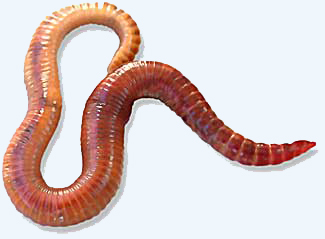
 
Eisinia fetida
 [...] Singapore needs to consider urban agriculture in policy and to increase not only research into areas of agro-technology and agro- and hydroponics but also about how to bring those actions to the local, community level. 

We need to learn to eat more sustainably, that means less meat due to its high carbon footprint (being flown in from different parts of the world and chalking up “food miles”

We cannot remain ignorant to the fact that even the food we eat contributes to short-term climate change ie global warming and being in a country/city that is highly dependent on external food sources, we need to begin to move towards more sustainable forms of getting food and eating food...or even disposing of food.

Friday, 22 July 2011

Ni Luh Kartini: The Secret Life Of Worms

Trisha Sertori, CONTRIBUTOR, DENPASAR | Tue, 03/17/2009 11:49 AM
Ni Luh Kartini (right) and her husband Made Agustini grow worms and teach farmers across Bali how to again farm organically as they did in the 1960s. JP/J.B. Djwan 
Ni Luh Kartini (right) and her husband Made Agustini grow worms and teach farmers across Bali how to again farm organically as they did in the 1960s. JP/J.B. Djwan
 
Gone are the lands of rice and honey remembered from childhood. The earth lies desolate, exhausted and barren after a 40-year rape by chemical fertilizers, DDT and nutrient-hungry Green Revolution rice strains.

Little grows in the Balinese village of Bulian in Singaraja’s sunburned hinterland. The earth cracks like rusted iron under the hoe and farmers are grizzled with worry and memories of welcoming soils.

One woman is trying to restore this acid ground to its remembered fertile richness. Ni Luh Kartini, born in Bulian in 1960, remembers a green landscape of rice fields, honeycomb, fruits, ducks and vegetables – a land brimming with life. About the same time, thousands of miles and a universe of education away, an American marine biologist, Rachel Carson, witnessed her nation’s silent spring. Carson’s book was the crossbow targeting American use of DDT in agriculture and guided environmentally aware future generations. Indonesia’s silent spring had just begun.

Kartini’s earliest memories are of her father carrying her to the rice fields. “Bulian is very dry, but in the early 1960s we had a small plot of rice. As the oldest I was born into a tradition of farming. Dad carried me to the fields from birth and once I could walk I followed him there everyday. I absorbed knowledge of the farm from birth – I was never afraid of worms or frogs or snakes – animals,” says Kartini, who, now almost 50, is a Ph.D. and lecturer in agriculture at Udayana University in Denpasar.

She spent her early childhood tending ducks, working beside her father in the rice fields and family gardens and playing – a childhood of joy and adventure. “Even though we were poor in monetary terms, I thought we were very rich; during my childhood we had fruit and vegetables growing, we had honey and honeycomb. If we wanted meat we would kill a chicken or a pig or even a cow. That’s what we ate and my younger brother grew to be two meters tall on that diet. When I started school I already had my own business breeding ducks and selling the eggs.”

This world – of rice harvests dancing to the music of cool breezes, mangoes dripping globular with the juice of their vivid orange hearts and vegetable gardens groaning under the weight of maturing tomatoes, spinach, cabbages and carrots weeded daily by ducks hunting down worms – is dead. “In 1969, government workers came to our farm and told us about chemical fertilizer. They said it was God. That we could grow so much rice,” Kartini says. “I saw the worms in the soil of our rice fields writhe and die when we used the chemicals they called God. I cried because what would my ducks eat?”

By 1972, government workers were spraying her village rice fields with DDT. “They told us it was medicine for the rice. Soon after the spraying I took my ducks to the rice fields to feed. I drank some water from a rice stalk – we always did that – the water was so sweet. I fell unconscious.When I came to, 25 of my ducks were dead and I was lucky to be alive. DDT wasn’t medicine for our fields – it was poison.”

Trying to understand what was happening to her world, Kartini asked questions of the adults in her life. “No one could answer me. I met an engineer from the university and he said if I wanted to find out and bring the worms back to the soil I would have to go to school, then university to get the title ‘agricultural engineer’. I went home and prayed to Brahma. I made a promise that if Brahma helped me get the name ‘agricultural engineer’ I would bring worms back to Bali.”

To date she has returned worms to the soil of more than 40,000 hectares across Bali. For a girl from a rural area, getting an education was not easy.“At that time, girls in my village did not go to school. It was seen as a waste of time and money, because we would just get married anyway. My father refused to let me go to school, but my mother backed me 100 percent. We told a fib and said the money for my education came from someone else.”

Today Kartini and her husband, Made Agustina, have developed the Bali Organic Association (BOA). They grow millions of worms organically in their Denpasar factory, supplying them to farmers along with organic compost that restores fertility to damaged soil. “Back in the 1980s farmers laughed at what I was trying to do. My Ph.D. supervisors all banned my thesis on worms and soil structures – but by the third supervisor I forced him to accept my Ph.D. outline. They all wanted me to do my thesis on genetically modified seeds,” says Kartini. 

But Kartini was convinced of the need to return to ancient farming practices to ensure sustainable farming into the future. Today, her beliefs are accepted worldwide – hundreds of farmers across Bali now learn from BOA, including the IDEP organization, which has made valuable contributions to organic farming across Bali.
“Nearly 100 percent of Bali’s farmers now want to return to organic farming,” she says. “The government plans to ‘go organic’ in 2010 with high-tech methods. All the government needs to do is give every farm a [1]cow and [2]teach them to make their own organic fertilizer. If farmers had this old knowledge – and worms in the soil – they would no longer be dependent on chemical fertilizers or outside assistance.”
She has five steps to successful farming based on land restoration, the use of [3]local rice seed instead of Green Revolution strains, [4]training for farmers on farming organically and [5]using local resources, such as cow manure, and selling their own produce. “Farmers need access to markets. Currently it is the middle men making money not the farmers,” she says. “If we give farmers these five tools they will become more successful and halt the destruction of Bali.”